
Carnival in Lanzarote
Carnival in Lanzarote: tradition, identity and unique ways of celebrating
Carnival in Lanzarote is much more than costumes, parades and music.
It’s a celebration deeply connected to the island’s history, the everyday life of its villages and popular traditions that have endured over time. While Carnival today includes stages, floats and large-scale events, Lanzarote still preserves very old expressions, unique within the Canary Islands, that help us understand the island’s character and its close relationship with the sea, the land and community life.
In this article, we explore the origins of Carnival in Lanzarote, how it’s celebrated today, and the meaning behind two of its most emblematic traditions: the Diabletes of Teguise and the Buches of Arrecife.
The origins of Carnival in Lanzarote
As with many popular celebrations, there is no single date that marks the beginning of Carnival in Lanzarote.
Historical records place its origins after the European conquest of the island in the 15th century, when festivities linked to the Christian calendar before Lent were introduced.
Over the centuries, these celebrations blended with local customs, maritime influences and popular traditions, shaping a form of Carnival closely connected to everyday life on the island. During periods of prohibition —particularly throughout the 20th century— many of these expressions survived quietly, kept alive in neighbourhoods and within the popular sphere.
Today, Carnival in Lanzarote brings together this historical legacy with more contemporary expressions, maintaining a balance between spectacle and tradition.
How Carnival is celebrated in Lanzarote today
Today, Carnival is celebrated across all municipalities of the island, although Arrecife hosts many of the main events.
• Carnival parades and street processions
• murgas and comparsas
• costume competitions
• the election of the Carnival Queen and Drag Queen
• family-friendly and children’s activities
• the traditional Burial of the Sardine, which brings the festivities to a close
Over several weeks, Lanzarote comes alive with:
• Carnival parades and street processions
• murgas and comparsas
• costume competitions
• the election of the Carnival Queen and Drag Queen
• family-friendly and children’s activities
• the traditional Burial of the Sardine, which brings the festivities to a close
Beyond the official programme, Carnival is also lived out in the streets, neighbourhoods and villages, where the atmosphere feels more local and participatory. It’s an ideal time to observe everyday life, mingle with residents and understand the social and communal dimension of the celebration.
The Diabletes of Teguise: one of the oldest Carnival traditions in the Canary Islands
One of the most distinctive Carnival expressions in Lanzarote is the Diabletes of Teguise, a tradition considered among the oldest and most singular in the Canary Islands.
Their origins are linked to ancient ritual and competitive dances practised by the mahos, the island’s original inhabitants, with clear parallels to festive traditions from the Berber cultural sphere.
Over time, these expressions became part of religious celebrations such as Corpus Christi, and later — after certain representations were banned towards the end of the 19th century — they found continuity within Carnival, where they have survived to this day.
The figure of the Diablete is built around the image of the male goat, a symbol of strength and fertility, accompanied by the sound of bells and the use of a goat-skin bag. These elements reinforce the ritual nature of the character and its striking presence as the Diabletes run through the historic streets of Teguise.
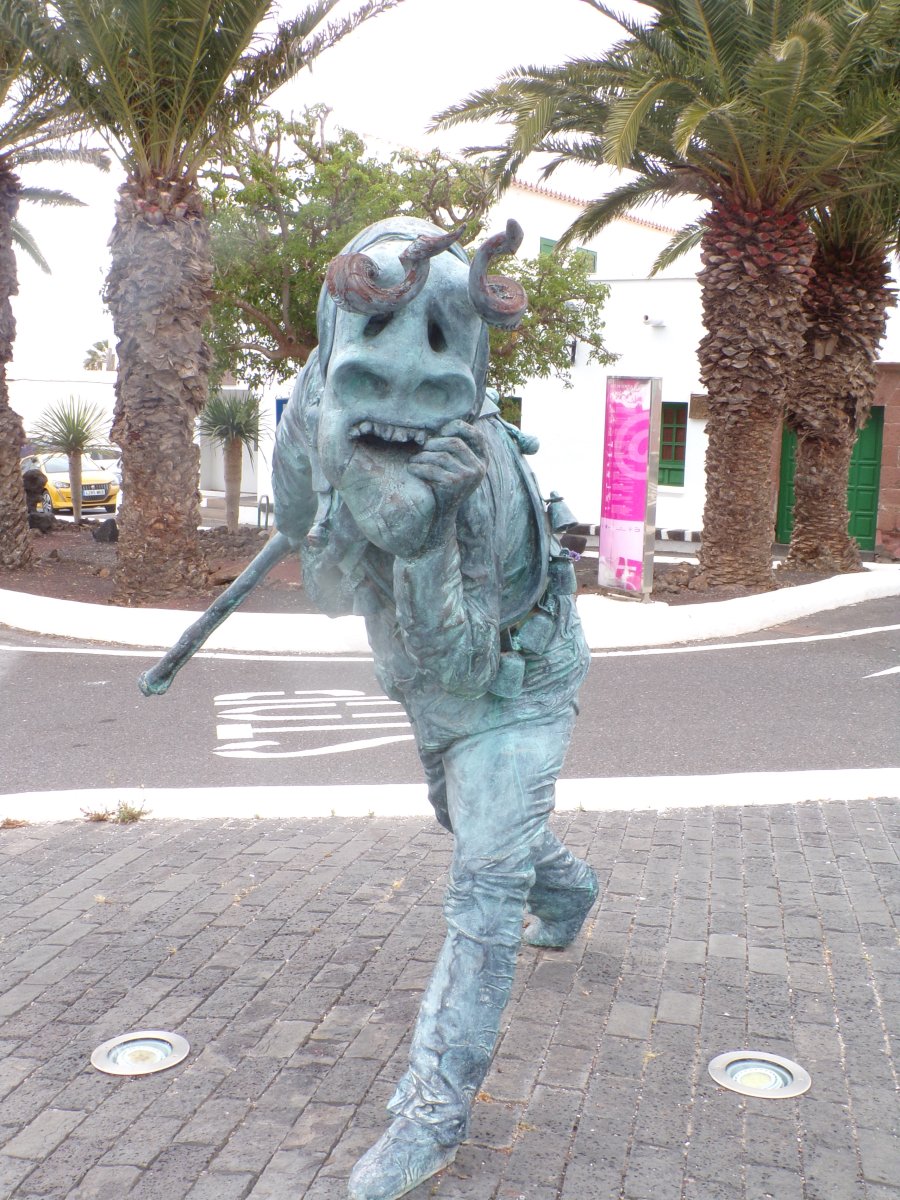
carnival in LANZAROTE
Teguise Carnival
Elegua sculpture in Teguise, symbolising the figure of the Diablete
Los Buches of Arrecife: Carnival rooted in the sea
In Arrecife, Carnival has a direct connection to the sea through Los Buches, a tradition born within the capital’s maritime community.
Los Buches of Arrecife are one of the most authentic expressions of Carnival in Lanzarote, deeply rooted in the seafaring identity of the town.
This tradition takes us back to the fishermen who, after spending long months at sea, would return home and walk through the streets to celebrate their safe arrival with friends, family and neighbours.
During these celebrations, they wore simple clothing similar to that of local farmers and covered their faces with fishing nets — a symbolic gesture representing the fraternal bond between the world of the sea and the land. Inflated fish bladders, known as buches, were used playfully, setting the rhythm of the gathering and reinforcing its communal and participatory spirit.
Today, this tradition lives on through the Parranda Marinera de los Buches, which still takes to the streets during Carnival, keeping alive a custom closely linked to Arrecife’s fishing heritage. Watching Los Buches is a way of understanding how Carnival in Lanzarote grows out of everyday life — from work at sea, shared effort and the close ties between neighbours.
If you’d like to explore Arrecife’s maritime past in more depth, we recommend joining a guided walk around the city with Guía En Lanzarote.
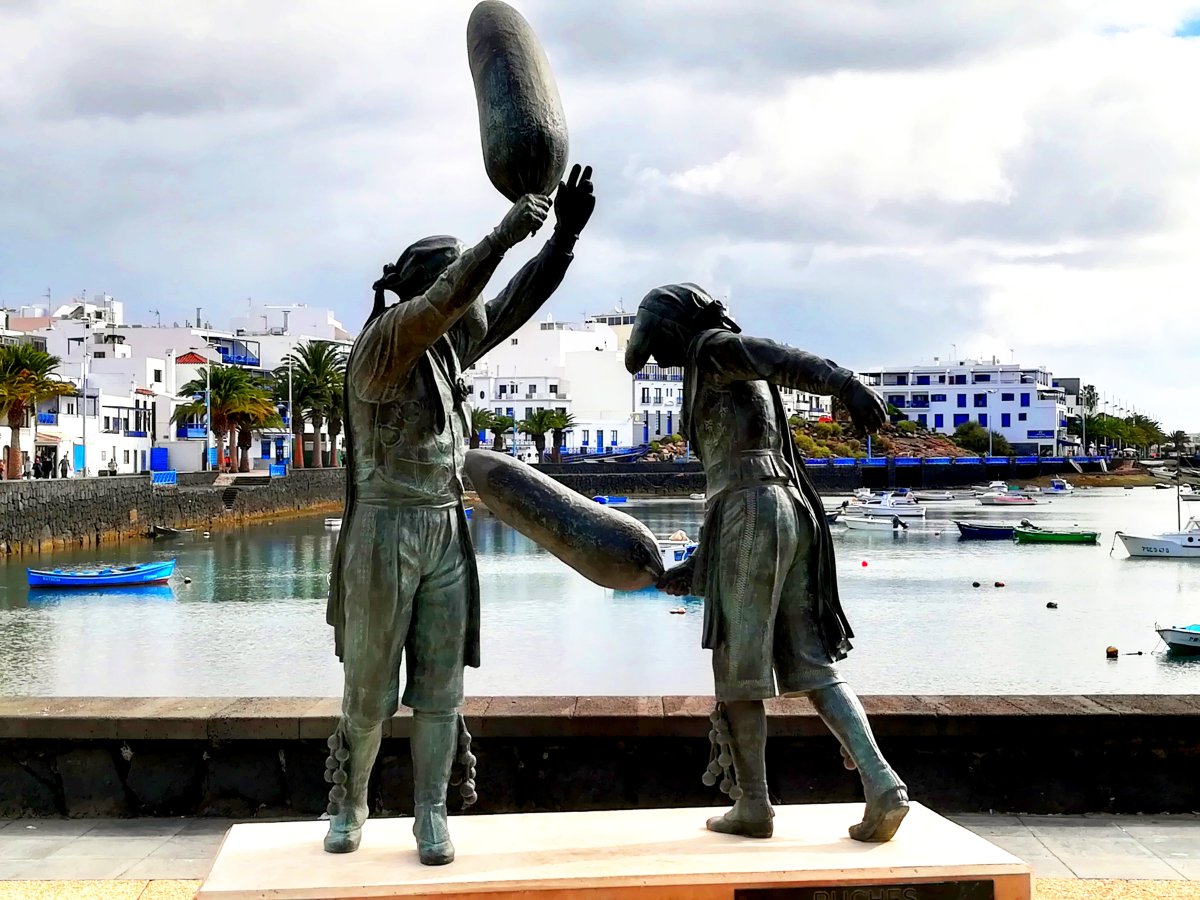
Carnival in Lanzarote
Arrecife carnival
Sculpture paying tribute to the Los Buches folk group at Charco de San Ginés, Arrecife
Experiencing Carnival in Lanzarote with a local perspective
For those visiting the island at this time of year, Carnival is a perfect opportunity to discover Lanzarote from the inside, beyond its volcanic landscapes.
• prioritise traditional events over the most crowded ones
• visit Teguise on the day the Diabletes take to the streets
• enjoy the Buches in Arrecife up close, not just as a spectacle
• combine Carnival events with slow walks through nearby villages
A few ways to experience it with calm and authenticity:
• prioritise traditional events over the most crowded ones
• visit Teguise on the day the Diabletes take to the streets
• enjoy the Buches in Arrecife up close, not just as a spectacle
• combine Carnival events with slow walks through nearby villages
• observe, listen and let yourself follow the local rhythm
Carnival in Lanzarote is not just something to watch — it’s something to share.
Carnival in Lanzarote is a living celebration, constantly evolving yet deeply rooted in its territory. From ancient rituals to contemporary expressions, it reminds us of the importance of community, memory and popular culture. Experiencing it with respect and curiosity is one of the best ways to truly connect with the island and understand its character.
Experiencing Carnival in Lanzarote: dates and themes across the island
In Lanzarote, Carnival is not limited to just a few days or a single town. Beyond the official dates of Arrecife Carnival, which usually sets the celebrations in motion, the island enjoys almost a full month of Carnival, spread across different municipalities and villages. Each one has its own rhythm, character and themed storyline.
After Arrecife, the Carnival atmosphere moves on to places such as Puerto del Carmen, Costa Teguise, Teguise and Playa Blanca, and later reaches smaller towns like Haría and Tinajo.
This island-wide Carnival journey, which typically runs from February through well into March, allows visitors to enjoy parades, murgas and local traditions in very different settings, with a distinct theme in each municipality. It’s a very particular way of experiencing Carnival in Lanzarote: decentralised, close to everyday life and deeply connected to each community — ideal for those who want to discover the island slowly and share in local traditions. Below are the announced or expected dates and themes for the 2026 Carnival season, always subject to possible changes by local councils: